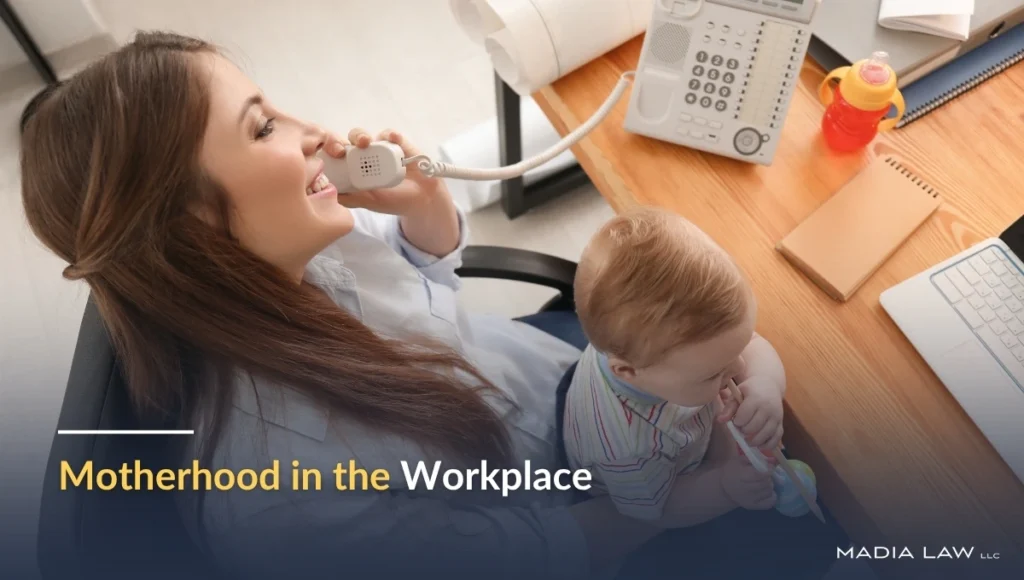
If your hours got cut after you told your employer you were pregnant, if a request for pumping breaks got a vague answer instead of a straight one, or if you came back from leave to a job that does not look like the one you left, that’s not just a difficult manager. Depending on what happened, it may be illegal.
The research is clear on one point: becoming a mother does not make you less capable at your job. What often changes isn’t your performance. It’s whether your employer follows the law, and in Minnesota, that law reaches further than most people realize, covering both state and federal protections that most employers are still catching up on.
You don’t need to have this figured out before you reach out. If something here sounds familiar, our Minneapolis employment lawyer is a call away at 612-349-2729, no pressure, just a conversation.
| Key Takeaways |
|
When Does Workplace Bias Become Illegal Pregnancy Discrimination?
Not every frustrating moment at work is illegal. But there’s a real line, and it’s worth knowing exactly where it sits.
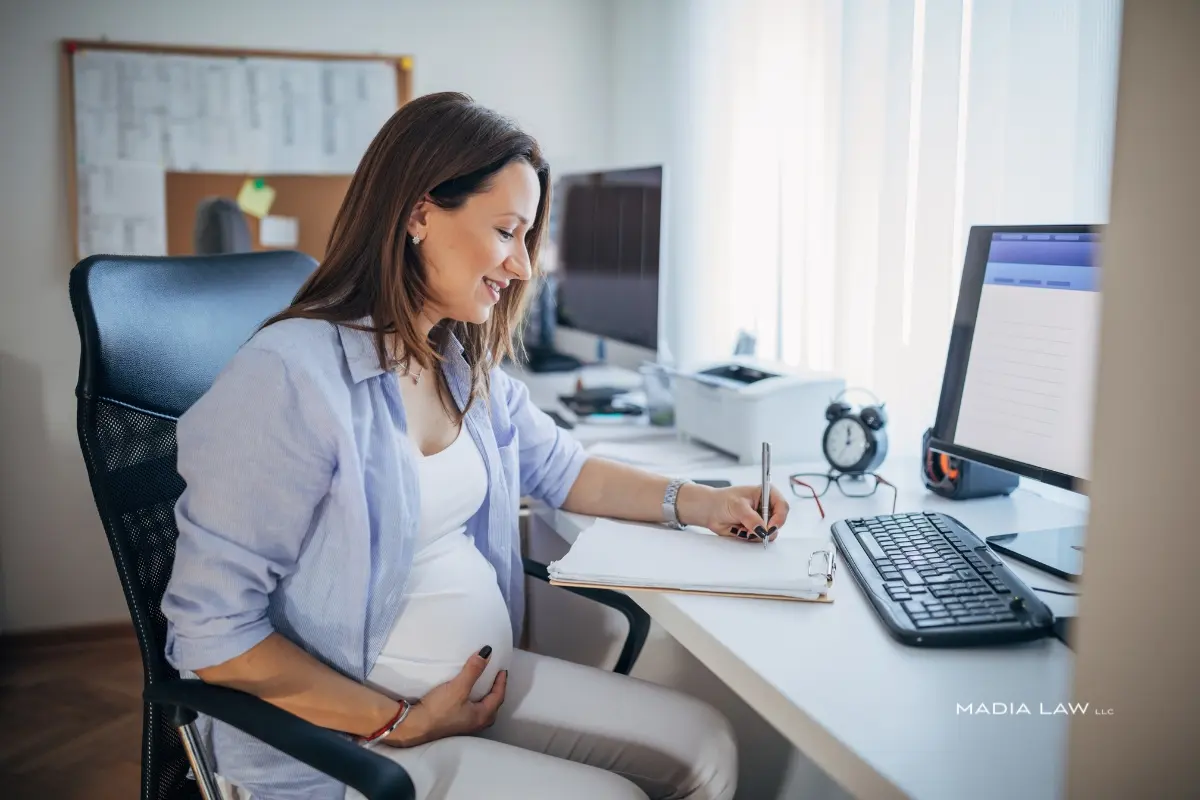
Pregnancy discrimination happens when an employer takes an adverse action, such as firing, demoting, cutting hours, or denying an opportunity, because of pregnancy, childbirth, or a related medical condition. In Minnesota, this is prohibited by the Minnesota Human Rights Act (MHRA), and at the federal level by the Pregnancy Discrimination Act, an amendment to Title VII of the Civil Rights Act.
Signs the line has been crossed, drawn from the common signs of workplace discrimination, include:
- Being fired, laid off, or demoted shortly after disclosing a pregnancy
- Reduced hours, changed duties, or being passed over for a promotion you were on track for
- Write-ups or attendance penalties tied to pregnancy-related appointments or symptoms
- Comments suggesting you’re less committed, less reliable, or not really needed now
- Pressure to resign instead of receiving an accommodation you’re legally entitled to
The timing of what happened counts too. If an adverse action happens shortly after you disclose a pregnancy, request an accommodation, or return from leave, that timing itself can be evidence. Lawyers call this temporal proximity, and it’s often one of the first things worth documenting. If this sounds like your situation, a Minneapolis pregnancy discrimination lawyer can help you evaluate whether what happened crosses that line.
Ready To Talk? Contact Madia Law Today
Minnesota Pregnancy Accommodation Rights: What Every Employer Must Provide
As of July 1, 2023, an amendment to Minnesota Statute § 181.939 expanded pregnancy accommodation rights to cover every employer in the state with one or more employees. Before that date, the threshold was 15 workers. That threshold is gone.
Under current Minnesota employment law, if you’re pregnant and you ask for it, your employer must provide, without requiring a doctor’s note, no exceptions:
- More frequent or longer restroom, food, and water breaks
- Seating
- Limits on lifting more than 20 pounds
Depending on your healthcare provider’s or doula’s guidance, you may also be entitled to a temporary transfer to a less strenuous role, a modified schedule, or a temporary leave of absence. These broader accommodations can be denied if your employer shows genuine undue hardship, but your employer cannot require you to take leave if a reasonable adjustment would let you keep working instead.
Federal law layers on top of this through the Pregnant Workers Fairness Act (PWFA):
| Minnesota Law (§ 181.939) | Federal PWFA | |
|---|---|---|
| Employer size covered | 1 or more employees | 15 or more employees |
| Doctor’s note required? | No, for core accommodations | Case by case |
| Effective since | July 1, 2023 (expanded) | June 27, 2023 |
Unpaid Leave Rights Under the Minnesota Pregnancy and Parenting Leave Act
Separate from accommodations while you’re working, Minnesota law also guarantees unpaid, job-protected time off.
The Minnesota Pregnancy and Parenting Leave Act (Minn. Stat. §§ 181.940-181.944) entitles eligible employees to up to 12 weeks of unpaid leave for the birth or adoption of a child, or for prenatal care and incapacity related to pregnancy or childbirth. The same 2023 law that expanded pregnancy accommodations to every employer also expanded this leave right to every employer with one or more employees, and employees are now eligible starting on their first day, with no year-long tenure requirement.
When your leave ends, Minnesota law entitles you to return to the same position, or one with comparable duties, pay, and benefits. That protection is in the statute, not just a courtesy your employer can choose to extend. This state law leave runs together with any federal FMLA leave you qualify for.
Not Sure Where To Start? Contact Us
Minnesota Paid Leave for New and Expecting Parents (2026 Program)
Minnesota’s parenting leave protections were job-protected but unpaid. That changed on January 1, 2026, when Minnesota’s new Paid Leave program began paying benefits.
Under this program, eligible workers can receive:
- Up to 12 weeks of paid medical leave for their own serious health condition, including pregnancy recovery
- Up to 12 weeks of paid family leave for bonding with a new child
- A combined maximum of 20 weeks in a benefit year if you need both
Paid Leave is funded through payroll premiums and administered by the Minnesota Department of Employment and Economic Development, not your employer directly. It covers nearly every Minnesota worker, including part-time and temporary employees, with very limited exceptions.
Paid Leave also carries its own job protection, but with one gap worth knowing about: that protection doesn’t start until you’ve worked for your employer for 90 days. The Pregnancy and Parenting Leave Act protects your job from day one, so if you’re newer to your job, that older state law may be doing more work to protect your position than Paid Leave is, even while Paid Leave is the one replacing your income.
Contact Madia Law Before You Decide Anything
Stacking FMLA, MPPLA, and Minnesota Paid Leave: What You Can Actually Take
Three different laws can apply to the same maternity or parental leave, and they don’t simply add up.
| Federal Family and Medical Leave Act (FMLA) | Minnesota Pregnancy and Parenting Leave Act (MPPLA) | Minnesota’s Paid Leave Law (Ch. 268B) | |
|---|---|---|---|
| Employer size | 50+ employees | 1+ employees | Nearly all employers |
| Employee eligibility | 12 months tenure, 1,250 hours worked | Immediate, from day one | Meets state wage requirements |
| Length | Up to 12 weeks | Up to 12 weeks | Up to 20 weeks combined |
| Paid? | No | No | Yes, partial wage replacement |
| Job-protected? | Yes | Yes | Yes, after 90 days of employment |
If you qualify for both FMLA and the Pregnancy and Parenting Leave Act, they run concurrently: 12 weeks of job-protected leave total, not 24. Minnesota Paid Leave works differently. It is a wage-replacement benefit, and under Minn. Stat. § 268B.27, your employer can require it to run at the same time as your FMLA or MPPLA leave rather than adding to it. If your employer has its own leave policy referenced in a severance agreement or offer letter, that’s a fourth layer worth reviewing before you sign anything.
You’re unlikely to string all three laws together for more time off than the law intends, but you may be entitled to more paid time than an unpaid leave alone would give you. If your employer is telling you no leave is available at all, it’s worth a conversation with a Minneapolis FMLA lawyer before you accept that answer.
Breastfeeding and Pumping Rights at Work in Minnesota
Minnesota’s protections for nursing mothers were also strengthened by the same July 2023 amendment to Minn. Stat. § 181.939.
Your employer must provide:
- Reasonable paid break time to express milk, with no time limit on how many months or years after birth this applies, and regardless of whether the break disrupts business operations
- A space to express milk that meets all of the following:
- Is not a bathroom
- Is shielded from view and free from intrusion
- Is close to your work area
- Has an electrical outlet
- Is clean, private, and secure
Before 2023, these protections were capped at 12 months after birth, and employers could deny breaks if they claimed it would unduly disrupt the business. Both of those limitations are gone. You can choose when to take these breaks, whether during an existing paid break, an unpaid meal break, or another time that works for your schedule.

Returning to Work After Parental Leave
The research on returning to work after leave tells a consistent story, and it’s not a flattering one for most employers. A study by researcher Taija Turunen and coauthors at Aalto University School of Business and Royal Holloway Business School, published in IE Insights, found that new mothers often feel pressure to downplay or hide the physical and emotional realities of early motherhood at work, simply to be taken seriously. A separate study by & Culture, cited in that same piece, found that more than half of returning mothers report dissatisfaction with how they were treated when they came back, and 70 percent describe stress, anxiety, or dread leading up to their return.
Academic researchers reviewing the broader literature on this problem have pointed out that most employer policies stop at leave and never build a real return or stay plan, leaving mothers to land back in a job structure that hasn’t adjusted to their new reality at all.
Common mistakes we see include:
- Assigning a returning employee to a different role or reduced responsibilities without discussion
- Excluding a new parent from meetings or projects to make things easier, without being asked to
- Treating a request for a modified schedule as a red flag about commitment rather than a normal accommodation
- Violating the reinstatement right covered above by returning you to a different pay, title, or reporting relationship than the one you had before leave
None of these is automatically illegal on its own. But several of them together, especially close in time to your leave or pregnancy disclosure, can look like workplace retaliation rather than ordinary business decisions. Our guide on how to prove retaliation in the workplace walks through what that evidence looks like. In the most serious cases, a return-to-work demotion or forced-out situation can cross into wrongful termination.
How to Protect Your Job Before and After Parental Leave
A few steps make a real difference if something later goes wrong:
- Put requests in writing. Email your accommodation or leave request rather than relying on a verbal conversation. You don’t need to cite a specific law by name, just be clear about what you need and why.
- Know your reinstatement rights before you leave. Under Minnesota law, you’re entitled to return to the same or a comparable position. Note your title, duties, and pay before you go.
- Document any change in treatment. Save emails, texts, and performance reviews. If your job changes shortly after your pregnancy becomes known or after you return from leave, write down dates and details while they’re fresh.
- Don’t sign anything you haven’t had reviewed. If you’re offered a severance agreement in connection with a leave-related dispute, have it reviewed before you sign, since it may waive rights you don’t realize you’re giving up.
- Don’t assume silence means you have no case. Many people don’t realize what happened to them counts until they say it out loud to someone else. That uncertainty is common, and it’s worth a conversation before you decide there’s nothing to do.
What Is the “Motherhood Penalty” in the Workplace?
Researchers call it the motherhood penalty: the pattern of mothers being treated as less competent and less committed at work, purely because they are mothers. It shows up before you even return from leave, and it keeps showing up afterward, in performance reviews, hiring decisions, and who gets tapped for the next promotion.
Part of what drives this penalty is what researchers call role incongruity: leadership in most workplace cultures is still coded with traits like assertiveness and constant availability, while motherhood is coded with warmth and caregiving. A review of 52 peer-reviewed studies on motherhood and career progression, published in the journal Behavioral Sciences, found that much of what gets treated as a personal shortcoming in working mothers is actually this structural mismatch between rigid, always-available job norms and caregiving responsibilities.
In its most visible form, this bias can look like a hostile work environment, where comments and treatment shift noticeably once a pregnancy or new baby becomes known. But it also shows up quietly, like getting suddenly excluded from key client accounts or being handed an unfair, hyper-critical performance review.

How the Motherhood Penalty Affects Pay, Hiring, and Promotions
The research puts real numbers behind what a lot of working mothers already sense.
- Wage gap: According to AAUW’s Motherhood Penalty research, mothers earn roughly 63 cents for every dollar paid to fathers on average. Among mothers who work full time, that narrows to about 71 cents on the dollar, still a meaningful gap.
- Hiring bias: Research by sociologists Correll and Benard found that mothers were rated as less competent and recommended for lower starting salaries than equally qualified candidates without children, even with identical resumes.
- The dominance penalty: Even mothers who succeed aren’t fully protected. Highly successful working mothers are sometimes rated as less likable than equally successful peers without children, which can quietly affect who gets the next opportunity, regardless of performance.
If pay or promotion bias like this happens after you’ve reported discrimination or requested an accommodation, it can also cross into retaliation, the kind reflected in the sex discrimination case results we’ve secured for clients.
A Minneapolis Mother’s Story: Pregnancy Discrimination and What Came Next
“Madia Law helped me when everyone else looked the other way. I was dealing with a pregnancy discrimination case when my former employer provided false allegations about my work ethic and I was terminated from my employment. In this case I was one woman facing a giant and I was ready to give up until I came across Madia Law’s webpage. Within minutes of submitting my case request I received a call and found comfort in knowing that I wasn’t alone. They are heaven sent and I am entirely grateful!”
★★★★★
— Christina Vescio, Verified Google Review
Christina’s story follows a pattern that the Minnesota Human Rights Act and Title VII are built to catch: performance concerns that surface only after a pregnancy is disclosed, used as a stated reason for termination. J. Ashwin Madia, a former U.S. Marine Corps judge advocate and Fellow of the American College of Trial Lawyers, represented Christina’s case. You can read more client reviews from people who came to us after being turned away, dismissed, or unsure whether what happened to them was even worth pursuing.
What to Do If You’re Facing Pregnancy Discrimination or Denied Leave
If you think this is happening to you, whether it’s outright discrimination or your employer denying an accommodation or leave you’re entitled to, here’s how the process works in Minnesota. There are two different doors, depending on the problem:
- If you believe you’ve been discriminated against because of pregnancy, the Minnesota Department of Human Rights (MDHR) handles that complaint.
- If your employer is denying an accommodation or leave you’re entitled to under § 181.939 or the Pregnancy and Parenting Leave Act, that’s handled separately by the Minnesota Department of Labor and Industry’s Labor Standards Division.
Deadlines matter, and the process changed recently. Discrimination complaints with MDHR must be filed within one year of the last discriminatory act. Federal claims through the EEOC run on a shorter, 300-day clock. As of October 1, 2025, the two agencies no longer automatically share your filing, so filing with only one no longer protects your rights under the other. If you want to preserve both, you need to file with each agency separately, and there’s no way to recover a missed deadline after the fact. For a step-by-step walkthrough, see our guide to filing an employment discrimination complaint in Minnesota.
You don’t need a folder of evidence or a filing strategy figured out before you call. Our Minnesota employment attorney can help you sort out which door applies to you and what your deadline actually is at 612-349-2729.
Frequently Asked Questions
Can I Be Fired for Being Pregnant in Minnesota?
No, Minnesota and federal law both prohibit firing an employee because of pregnancy, childbirth, or a related medical condition. Employers cannot cite pregnancy, directly or indirectly, as a reason for termination, demotion, or reduced hours. For a full breakdown, see our blog on “Can you get fired for being pregnant in Minnesota?”
Can I Take Minnesota Paid Leave and FMLA Leave at the Same Time?
Yes, Minnesota Paid Leave and FMLA leave run at the same time for most employees. FMLA provides unpaid, job-protected leave up to 12 weeks. Minnesota Paid Leave adds partial wage replacement during that same period rather than extending it, capped at 20 combined weeks a year. Employers set the exact overlap under Minn. Stat. § 268B.27.
What If My Hours Were Cut Right After I Told My Employer I Was Pregnant?
A sudden cut in hours right after a pregnancy disclosure counts as strong evidence of pregnancy discrimination. Lawyers call this pattern temporal proximity. The shorter the gap between your disclosure and the schedule change, the stronger the inference of a discriminatory motive. Document the dates, the disclosure, and the schedule change in writing immediately.
What Is the Deadline to File a Pregnancy Discrimination Claim in Minnesota?
The deadline to file a pregnancy discrimination claim in Minnesota is one year with the Minnesota Department of Human Rights and 300 days with the EEOC. Both deadlines start on the date of the last discriminatory act. The two agencies stopped automatically sharing filings on October 1, 2025. Separate filing with each agency preserves both state and federal claims.
Talk to a Minneapolis Employment Lawyer Today
We’re trial lawyers. Our core competency, above everything else, is trying cases to juries, and we specialize in beating giants. If something about how you’ve been treated at work during pregnancy, parental leave, or your return doesn’t sit right, we’d rather you ask us than wonder. Call our Minneapolis office at 612-349-2729 or complete a confidential case evaluation. There’s no cost to talk with us, and no pressure either way.

Prior results do not guarantee a similar outcome. Every case is unique, and the value of any claim depends on its specific facts. This page is for general information only and is not legal advice.
You Don't Have To Face This Alone. Call 612-349-2729.